Surgery
- Botox Bladder Injection
- Circumcision
- Collagen Injection
- Extracorporeal Shock Wave Lithotripsy (ESWL)
- Greenlight Laser TURP
- Percutaneous Nephrolithotomy (PCNL)
- Prostate Biopsy (TRUS/Biopsy)
- Radical Nephrectomy
- Radical Prostatectomy
- Reversal of Vasectomy
- Robotic Prostatectomy
- Transurethral Resection of Bladder Tumour (TURBT)
- Transurethral Resection of Prostate (TURP)
- Tension-Free Vaginal Tape (TVT)
- Ureteroscopic lithotripsy (URS)
- Varicocoelectomy
- Vasectomy
Clinic Location & Map
#16-11 Mount Elizabeth Medical Centre
3 Mount Elizabeth
Singapore 228510
| Phone: | +65 6235 1180 |
| Fax: | +65 6235 1186 |
| Emergency: | +65 6535 8833 |
| Email: | ccm@ccmurology.com |
Clinic Hours
| Monday - Friday | 8:30am - 5:00pm |
| Saturday | 8:30am - 1:00pm |
| Sunday / Public Holiday | Closed |
Greenlight Laser TURP
Watch Video on Greenlight Laser TURP
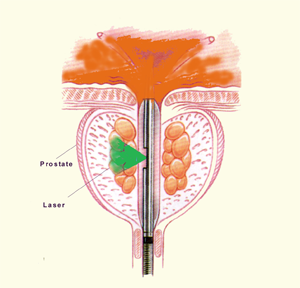
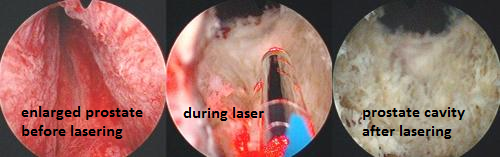
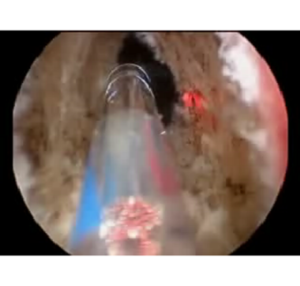
Greenlight laser TURP is the latest method for treatment of men with obstructive benign prostate enlargement (BPH). A specially designed fibre that emits a green laser beam is passed via a cystoscope to vapourise the prostate gland. The cavity that is created heals over the next 3 weeks. The advantage over conventional TURP is that the laser seals the prostate blood vessels very effectively, making it a bloodless procedure. General anaesthesia is usually given because it takes longer to do, sometimes up to 2 hours. A catheter is inserted into the bladder after the surgery but unlike conventional TURP, no irrigation fluid is needed. The catheter can even be removed later the same day without any worry of excess bleeding. As such, the hospital stay of just one day is possible compared to 3 to 4 days for standard TURP. The other advantage is that blood-thinning medication, such as Aspirin, Plavix or warfarin need not be stopped beforehand. Laser TURP is more expensive because of the added cost of the laser fibre and machine.
FAQS
Do I need any preparation?
- You will need to fast for 6 hours before the surgery, but you can take your essential medication, eg. anti-hypertension drugs on the morning of the operation. Do not take diabetic drugs.
What should I expect after the surgery?
- Following surgery, a urinary catheter is inserted, not so much to irrigate the bladder, but to remove the need to pass urine. Some discomfort over the penis is expected. Painkillers can always be taken if the discomfort is unbearable.
- The catheter is removed the next morning, and you can be discharged after you have successfully passed urine. Blood in the urine can still be seen, but it is usually minimal. Upon discharge, antibiotics will be given to prevent infection. You are advised to:
- Continue to drink plenty of fluids, from 8 to 10 glasses a day.
- Avoid lifting heavy things or exert yourself for 3 weeks.
- Avoid constipation by eating lots of fruits and high-fibre food. This is because straining to pass motion will cause bleeding to recur. Take laxatives if you still do not pass motion after 3 days.
- If you were taking Aspirin or Plavix before the operation, you can resume it after 2 weeks provided your urine is not heavily blood-stained.
When can I resume sex?
- Erection is not affected by this surgery. You should abstain from sex for 1 month after the surgery.
- Do not be alarmed if no ejaculate comes out. This is because the bladder neck is still cut in laser surgery, and this allows semen to flow backwards into the bladder. The semen will be passed out during urination and is not harmful at all whilst it is in the bladder.