
Varicocoelectomy
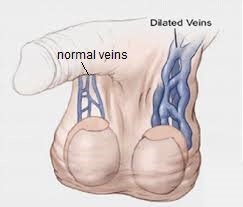
Normal veins vs varicocoele veins
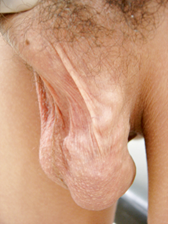
External appearance of scrotal varicocoele in left scrotum
Varicocoeles are abnormally dilated veins found in the scrotum. They tend to occur more frequently on the left side because the left spermatic vein drains via the kidney veins instead of direct into the major vena cava vein. Varicocoele surgery is normally performed to improve fertility, but is also indicated in varicocoele-related discomfort in the scrotum.
How it is done
The surgery is done under general anaesthesia as a day case and takes about 45 mins for each side. A small incision 2 cm long is made over the groin and the big veins within the spermatic cord identified. With the help of an operating microscope, these abnormal veins are individually dissected out and tied / clipped to interrupt their blood flow into the scrotum. The microscope allows the surgeon to identify and avoid injuring the testicular arteries and lymphatic vessels.
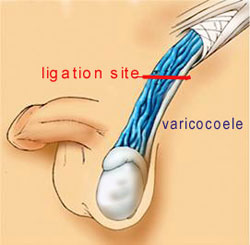
Incision site
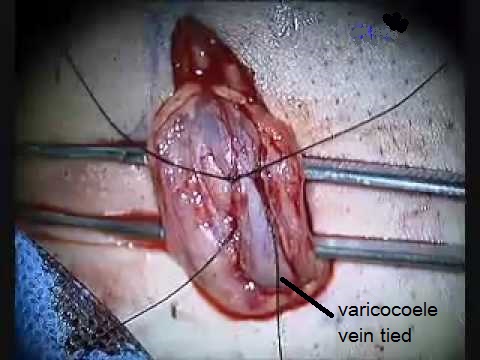
The large veins are individually tied
If done for subfertility, some 70% of men should find an improvement in their semen analysis and 50-60% of couples can achieve pregnancy.
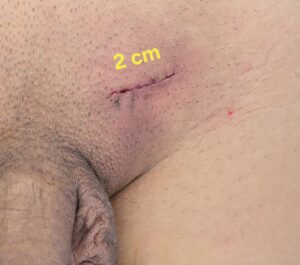
incision closed with self-dissolving suture
Complications include:
- scrotal swelling / bruising. This is expected because the blood return out of the scrotum via the veins is interrupted. These ligated veins then clot up to cause a cord-like swelling. The swelling usually subside within a month
- testicular artery injury. This occurrence should be <1% and due to inadvertent damage or accidentally tied
- hydrocoele. This is excess fluid collection within the scrotum due to blockage of the lymphatic drainage
- recurrence. This occurs in up to 5% of cases and due to dilatation of the small spermatic veins over time or extra-spermatic veins going down the scrotum. These veins lie outside the spermatic cord and may not be seen through the small incisions
Desired outcomes:
- no testicular atrophy from testicular injury ( < 1% risk )
- no haematoma / hydrocoele ( 1% occurrence )
- no recurrence ( 5% chance)